
La Manufacture
www.manufacture.ch
Premiere: 18. 06. 2013.
WORKSHOP | Training program and performance with students from La Manufacture School of Lausanne
Lausanne (CH) | 2013
.jpg)
A provocation would designate the fact of calling something vocatio before someone pro-. Any theatre action can therefore be assimilated with a provocation in its political meaning: starting from the moment when someone in the light speaks and someone in the shade listens to him, political theatre already exists, at least its first stage.
The question for this actors collective will be to think about how to go further, considering the place where they are, a Swiss city, and what they are: young professionals getting ready to leave school to follow their vocation. They will begin by going to meet this polis (city) to which and from which they want to speak. They will try to define its contours and how its different communities function. Next will come the time to take the floor and with it, the time to take on responsibilities. (Árpád Schilling)
CAST
Performed by Rébecca Balestra, Sarah-Lise Salomon Maufroy, Simon Romang, Baptiste Morisod, Julien Jacquérioz, Caroline Imhof, Agathe Hazard-Raboud, Alain Guerry, Jérôme Denis, Océane Court, Piera Bellato, Karim Bel Kacem, Tatiana Baumgartner, Isabelle Vesseron
Directed by Árpád Schilling
Assistant to the director: Karim Bel Kacem
Technical team: Nicolas Berseth, Eugène Dyson
A production of La Manufacture Haute École de Théâtre de Suisse Romande, with the support of Domaine Musique et Arts de la scène HES-SO.
The performance was invited in 2013 to the "Écoles au Festival" section of the Festival d'Avignon.
Download the PROGRAMME OF THE PERFORMANCE (in French) here

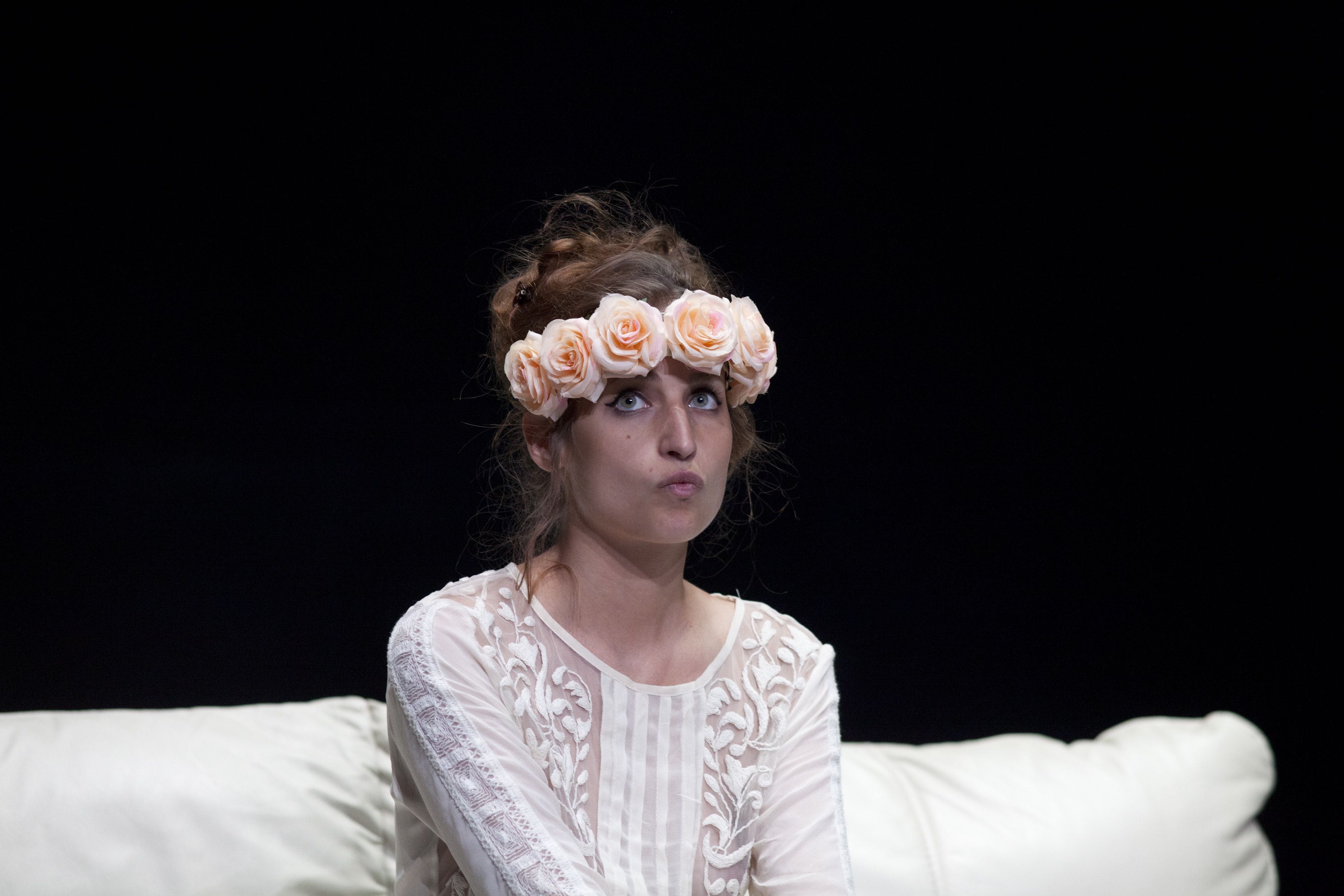
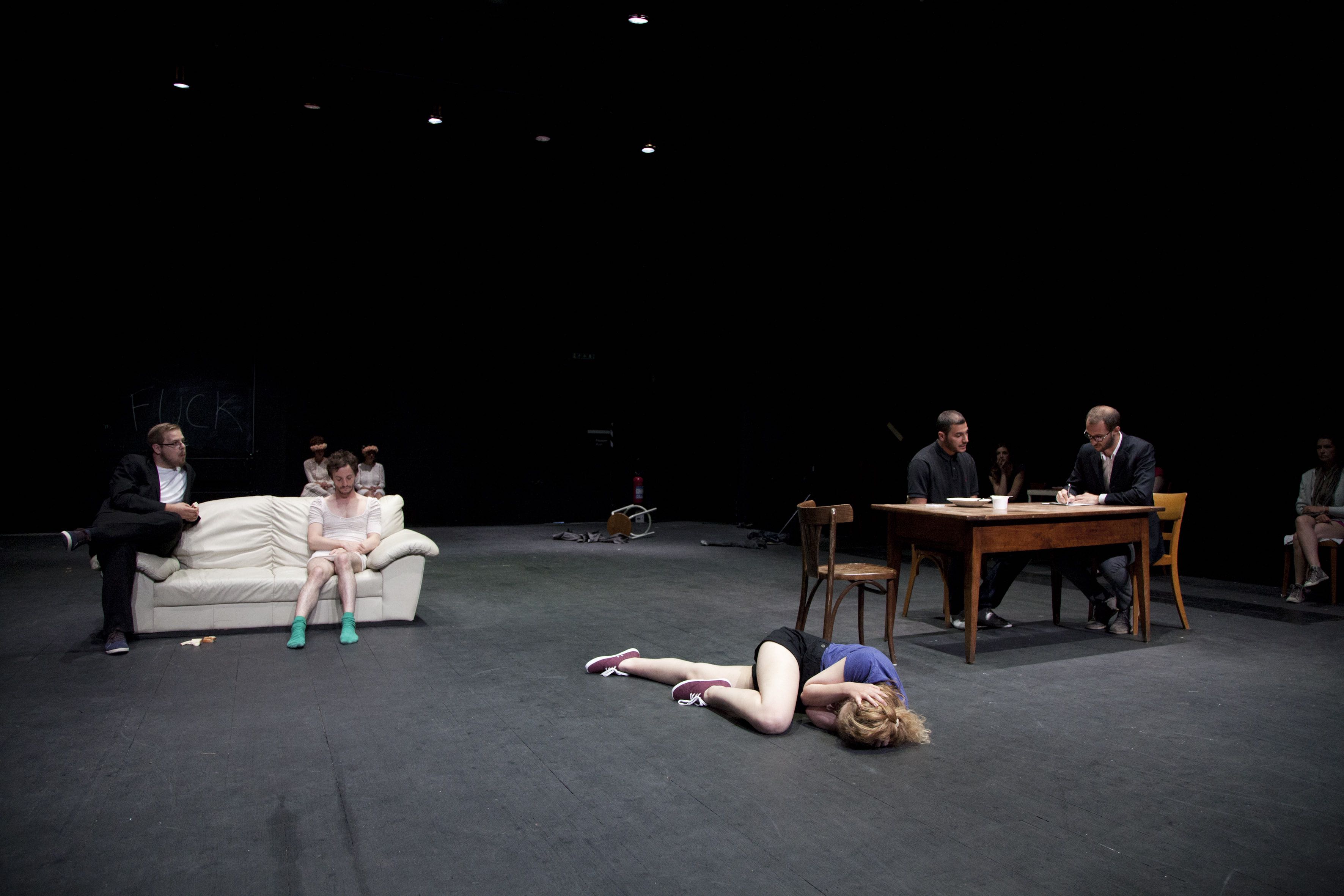
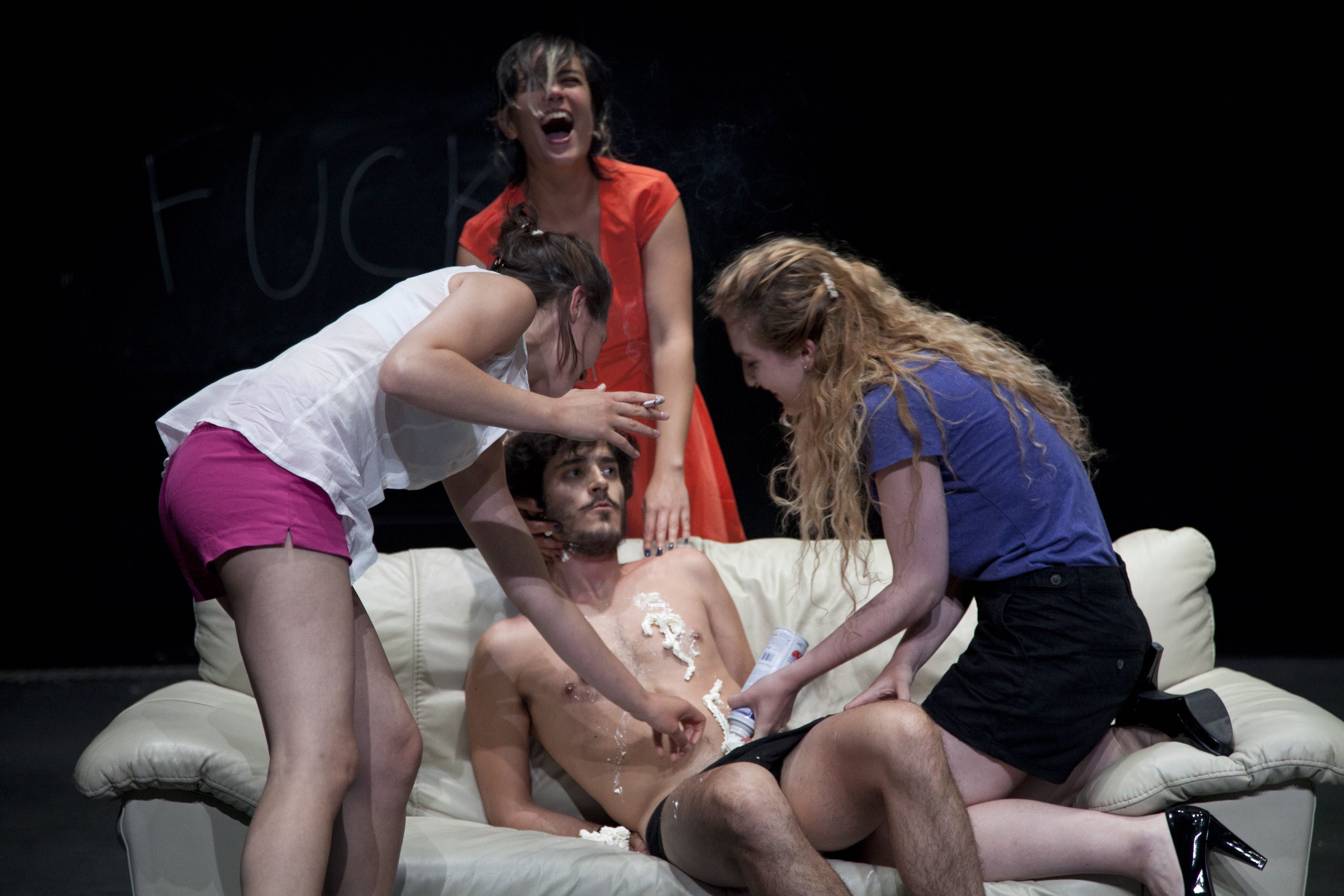
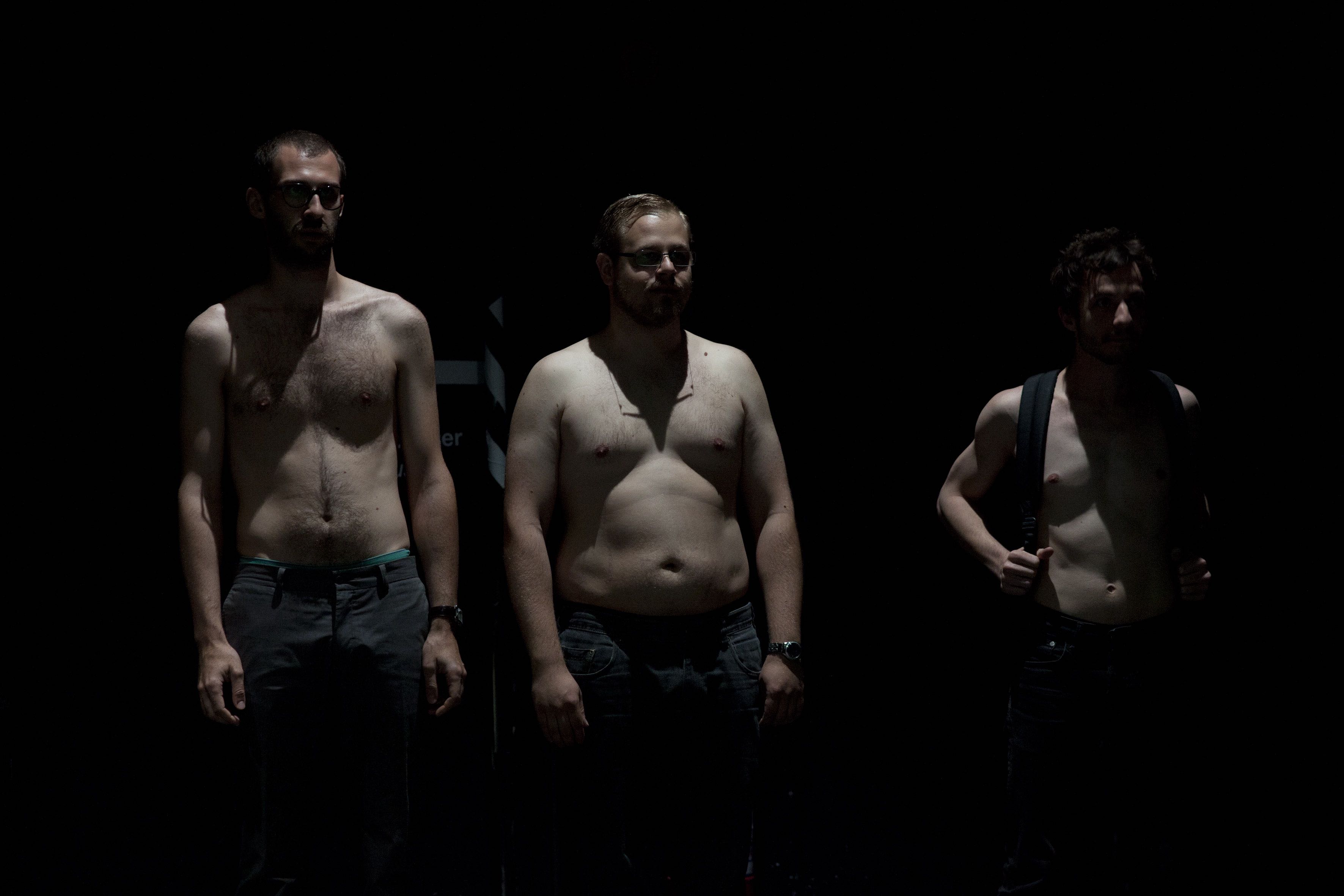
Photo: Aline Paley
PRESS
- Bálint Kovács: Schilling provokációja értelmet ad a színháznak. Origo Kultúra, 18. 07. 2013.
"“That Schilling and the actors sidestep clichés in how they raise problems also plays an important role in avoiding a didactic tone. It’s only one half of the thing that in more than one sense genuine communication takes place with spectators; for instance only concrete and brave intervention from spectators can decide the fate of a migrant (someone must really get up on stage, and really speak there). (…) With this kind of gesture the performance prevents the hand-waving reflex from being activated when we see scenes – supported by a continuous and fine humour, and unimpeachable too in the theatrical sense – about problems familiar to everyone. Because while obviously everyone replies “I know of it, thanks for the reminder” to the direct presentation of one or two societal cancer, nevertheless unexpected situations and unfamiliar perspectives genuinely require heightened attentiveness – since without it the scenes’ real suggestions remain hidden, not to mention the inversion’s significance and aim. And the thinking spectator is the best thing in the world. He gives the theatre it’s meaning."
- Bálint Kovács: "Akkor már nekik jó". Magyar Narancs, 19. 07. 2013. (interview)
- Cécile Dalla Torre: Des papesses à l’épreuve du jeu. Le Courrier. 28. 06. 2013.